The world of decentralized finance (DeFi) is evolving faster than ever. From cross-chain swaps and staking to yield farming and decentralized exchanges, users today have access to an entire financial ecosystem without relying on traditional banks. But with this rapid innovation comes one major concern — security.
As DeFi adoption grows, crypto users are searching for safer ways to interact with decentralized applications while maintaining complete control over their assets. This is where hardware wallets and smart wallet integrations are changing the game.
Inspired by the growing role of crypto aggregators and secure wallet connections discussed in the Cryptnox ecosystem , this blog explores how hardware wallets are becoming essential tools for modern DeFi users.
The Rise of DeFi Aggregators
DeFi platforms were originally fragmented. Users had to jump between multiple exchanges, bridges, staking platforms, and liquidity pools to complete even simple transactions.
Today, DeFi aggregators simplify this process by combining multiple decentralized services into a single interface. These platforms help users:
- Compare swap rates across multiple exchanges
- Access cross-chain bridges
- Optimize transaction routes
- Reduce gas fees
- Manage assets from one dashboard
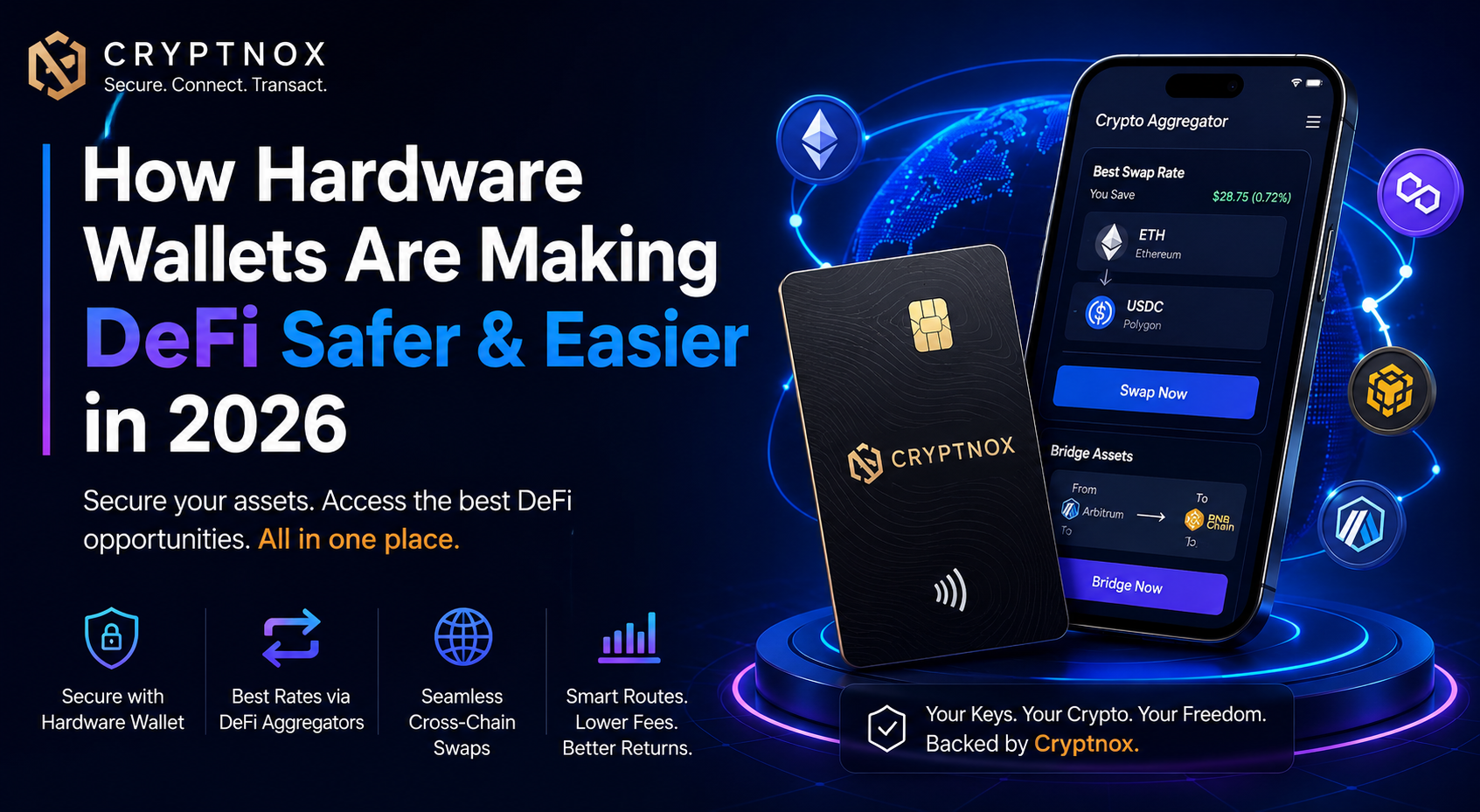
The Cryptnox PDF highlights how bridge aggregators improve cross-chain transactions by finding the most efficient routes and liquidity pools.
This evolution is helping DeFi become more user-friendly, especially for newcomers entering Web3.
Why Security Remains the Biggest Challenge
Despite the convenience of DeFi, security risks continue to rise. Users regularly face threats such as:
- Wallet phishing attacks
- Malicious smart contracts
- Private key theft
- Fake dApps
- Bridge exploits
Unlike traditional banking systems, DeFi transactions are irreversible. One wrong signature or compromised wallet can result in permanent loss of funds.
Software wallets alone are often not enough to protect valuable digital assets. This is why crypto hardware wallets are becoming increasingly important for serious crypto investors.
What Makes Hardware Wallets Different?
A hardware wallet stores private keys offline, keeping them isolated from internet-connected devices and online threats.
Instead of exposing sensitive credentials during transactions, the wallet signs approvals securely within the device itself.
Modern hardware wallets now support:
- NFT management
- Cross-chain transactions
- WalletConnect integration
- DeFi platform access
- Mobile-first authentication
- Secure transaction signing
This creates a much safer environment for interacting with decentralized applications.
The Role of WalletConnect in DeFi
One of the most important innovations mentioned in the Cryptnox document is WalletConnect.
WalletConnect acts as a bridge between crypto wallets and decentralized applications (dApps). Instead of entering sensitive information manually, users simply scan a QR code to establish a secure encrypted connection.
This process allows users to:
- Connect wallets securely
- Approve transactions safely
- Use DeFi applications without exposing private keys
- Access multiple blockchain ecosystems
The PDF demonstrates how users can connect a secure crypto wallet to DeFi platforms using WalletConnect in just a few steps.
This seamless experience is making DeFi more accessible to mainstream users.
How Hardware Wallets Improve Cross-Chain Transactions
Cross-chain activity is becoming a major part of crypto usage in 2026. Users frequently move assets between:
- Ethereum
- BNB Chain
- Polygon
- Solana
- zkSync
- Avalanche
However, cross-chain bridges can introduce additional risks.
Hardware wallets add an extra security layer by requiring physical confirmation before any transaction is approved. This reduces the chances of:
- Unauthorized approvals
- Malicious contract interactions
- Automated wallet draining attacks
When combined with cross-chain swap aggregators, users gain both convenience and security simultaneously.
Benefits of Using Hardware Wallets for DeFi
Enhanced Asset Protection
Private keys remain offline and protected from malware, hackers, and phishing attacks.
Secure Transaction Signing
Every transaction requires user approval directly from the hardware device.
Multi-Chain Compatibility
Modern wallets support multiple blockchain networks and DeFi ecosystems.
Better User Control
Users maintain complete ownership of their crypto assets without relying on centralized exchanges.
Safe Mobile DeFi Access
NFC-enabled wallets are enabling secure mobile-based DeFi interactions without compromising security.
Why Mobile Hardware Wallets Are Growing Fast
Traditional hardware wallets were often viewed as inconvenient because they required cables, desktop apps, or complex setup processes.
Now, NFC-enabled smartcard wallets are changing the experience entirely.
Users can:
- Tap the card with their phone
- Connect instantly through WalletConnect
- Sign transactions securely
- Access DeFi apps on mobile devices
This creates a smoother user experience while maintaining strong security standards.
The Cryptnox ecosystem demonstrates how NFC Web3 wallets integrate directly with DeFi platforms through WalletConnect-based authentication workflows.
The Future of Secure DeFi
The future of DeFi will depend heavily on usability and security working together.
As decentralized finance becomes more mainstream, users will expect:
- Faster onboarding
- Simpler wallet connections
- Cross-chain compatibility
- Stronger protection against hacks
- Mobile-first experiences
Hardware wallets are evolving from niche security tools into essential components of everyday crypto usage.
The combination of DeFi aggregators, WalletConnect, and hardware wallet technology is creating a safer and more efficient crypto ecosystem for both beginners and advanced investors.
Final Thoughts
DeFi continues to unlock new possibilities for digital finance, but security must remain a top priority.
Hardware wallets are no longer optional for users managing significant crypto assets. They provide the protection needed to interact confidently with modern DeFi platforms while maintaining full ownership and control.
As technologies like WalletConnect and cross-chain aggregators continue to mature, the integration between secure hardware wallets and decentralized finance will only become more important in the years ahead.
For crypto users looking to balance convenience, flexibility, and protection, hardware wallets may become the foundation of the next generation of Web3 finance.